

Article
What is Surface Plasmon Resonance and Can it Accelerate Your R&D?
Molecular interactions govern the success of new medicines and the performance of advanced materials, but capturing them in real time has long been a challenge for researchers. Surface Plasmon Resonance (SPR) has emerged as a practical solution, helping to reveal how molecules bind, how stable those interactions are, and how they can be studied under conditions that closely resemble physiological environments. With its sensitivity, ability to monitor interactions directly, and continuous data collection, SPR provides a reliable way of advancing research and development (R&D), establishing a consistent method that generates detailed information about molecular behaviour.
What is SPR?
SPR is an optical technique used to study how molecules interact at a surface. It relies on a thin metal film, usually gold, where surface electrons oscillate as plasmon. When polarised light is directed at the film at a specific angle, the plasmons respond, and because they are sensitive to changes in the local refractive index, even small binding events can be detected.
As the molecules bind to or dissociate from the surface, the refractive index changes, which alters the angle of reflected light. The SPR system detects this shift and records it as a signal in real time, producing a direct view of the interaction. Since SPR does not require fluorescent or radioactive labels, molecules can be studied without extensive modification or complex assay design. This combination of real-time monitoring and direct detection has made SPR a widely adopted tool across research in both life and physical science, helping to characterise binding strength, stability, and kinetics in a wide variety of systems like drug-target interactions, antibody-antigen recognition, and surface chemistry in advanced materials.
How Does SPR Work?
To understand how SPR operates, it helps to picture the flow of a typical experiment designed to measure the binding between two molecules. The process begins when a molecule of interest, called the ligand, is attached to a thin gold-coated sensor surface. A solution containing the analyte is then passed across it. When the analyte interacts with the ligand, the additional mass at the surface alters the local refractive index. This shift changes the resonance angle of the reflected light, which the SPR system records as a curve known as a sensorgram. The curve rises during the association phase, when molecules are binding, and falls during the disassociation phase, when they separate. From these patterns, researchers can calculate how quickly molecules bind, how long they stay together, and the strength of their interaction.
SPR can be implemented in several configurations depending on the needs of the experiment:
- Prism-based SPR - the traditional setup, where polarised light is directed through a prism onto a thin metal film. This approach offers high sensitivity and remains the most widely used.
- Localised SPR (LSPR) - uses metallic nanoparticles instead of a continuous film. Because plasmons are confined to the nanoparticle surface, LSPR is extremely helpful for probing nanoscale environments such as membranes.
- Imaging SPR (SPRi) - extends the principle of prism-based SPR by capturing resonance signals across a surface with a camera, allowing multiple binding events to be monitored in parallel.
How SPR Accelerates R&D
Faster Discovery and Screening
Traditional binding assays often require weeks to develop since they rely on labels or secondary detection chemistry. SPR avoids such steps by detecting interactions directly with high sensitivity and in a label-free manner, allowing even weak or early-stage binding events to be observed without extensive assay optimisation. This enables compound libraries to be screened in days, rather than months, accelerating the identification of promising candidates for further research and development.
Richer Insights Into Molecular Interactions
SPR is able to confirm binding events and offers deeper insight into the mechanisms that govern molecular interactions. By capturing kinetic constants through real-time monitoring, researchers can distinguish between molecules that bind rapidly but release quickly and those that bind more slowly yet form highly stable complexes. Such detail is crucial for R&D, as it helps guide drug design, optimise biologics, and reveal weak or transient interactions that conventional endpoint assays often overlook. SPR delivers this depth of information early in the research process, and so enables faster, more informed decision-making that accelerates R&D progress.
Resource and Cost Efficiency
As SPR requires only microliters of material to generate precise binding data, its low-volume sample consumption helps conserve valuable proteins, antibodies, and synthetic compounds. Combined with reduced reagent use, this contributes to lower experimental costs while maintaining data quality. SPR is straightforward to run and can be a cost-effective solution for routine analysis, enabling experiments to be completed more efficiently and freeing time and resources for the later stages of R&D.
Quantitative Evaluation Supports Earlier Decision-Making
SPR enables the quantitative evaluation of binding interactions, allowing researchers to compare molecular candidates on the basis of measurable differences in affinity and interaction strength. Having reliable numerical data at an early stage helps R&D teams decide which molecules merit further development and which can be deprioritised, reducing the time spent on candidates that are unlikely to succeed.
Kinetic Rate Constants for Clearer Mechanistic Understanding
In addition to confirming whether binding occurs, SPR captures association and dissociation events as they unfold, enabling the determination of kinetic rate constants. These values reveal how quickly molecules come together and separate, offering mechanistic insight that helps distinguish stable, desirable interactions from weak or transient ones, allowing researchers to focus development efforts on the most promising mechanisms sooner.
Versatility Across Disciplines
SPR has proven to be adaptable across many areas of research, making it valuable for:
- Life sciences - used to study proteins, nucleic acids, lipids, and small molecules.
- Complex samples - applied to serum or cell extracts to better mimic physiological conditions.
- Materials sciences - utilised to analyse thin films, coatings, and nanostructures where surface interactions are critical for optimising adhesion, stability, and overall material performance.
Since SPR can accommodate an extensive range of sample types, including purified proteins, DNA, RNA, lipids, intact cells, bacteria, viruses, and even nanoparticles or drug particles, it supports investigations across systems that vary from highly defined molecular targets, like antibody-antigen or protein-ligand pairs, to complex, heterogeneous environments, such as whole cells, bacterial surfaces, or serum-based samples.
The versatility of SPR has allowed researchers to investigate biological and material systems with only a single analytical platform. Using the same technique for proteins, lipids, or engineered surfaces enables teams to generate comparable data and share insights across projects. Such a unified approach simplifies training, reduces dependence on multiple assay types, and streamlines experimental design, helping research groups move from discovery to application more quickly and advancing overall R&D progress.
Can SPR Accelerate Your R&D?
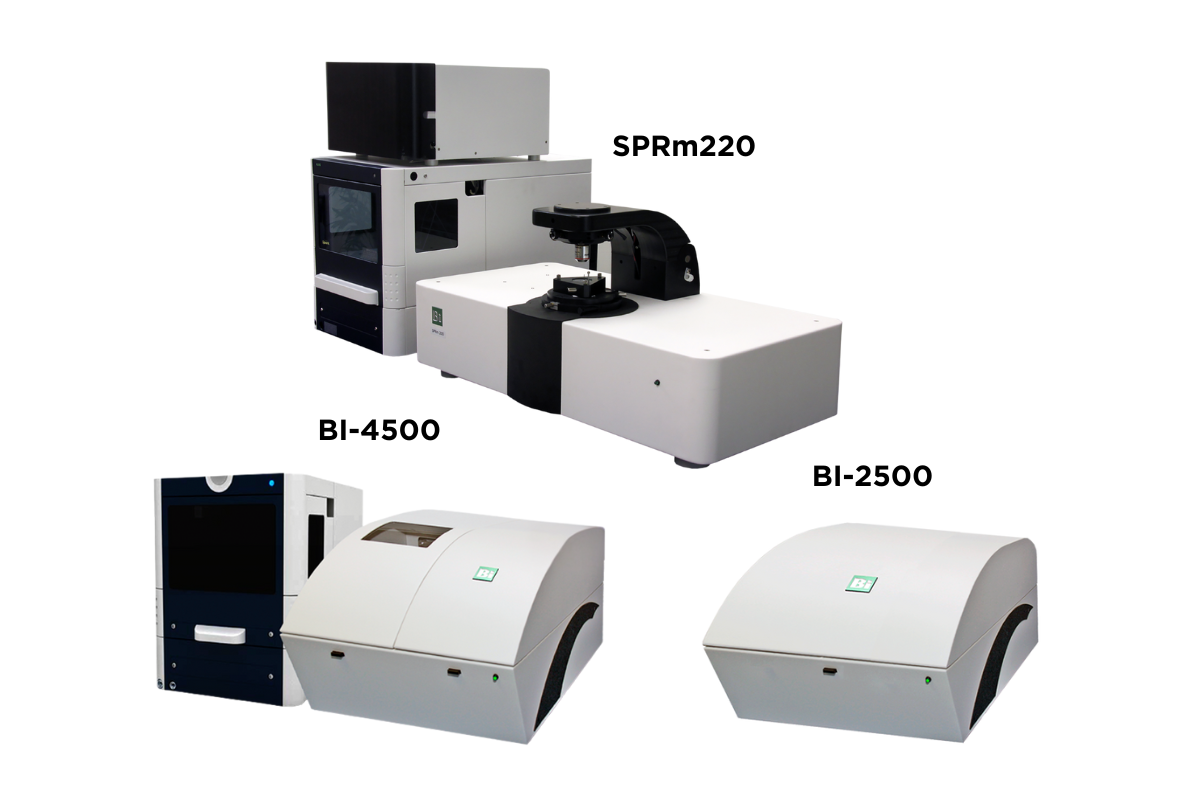
Surface Plasmon Resonance establishes a faster, more reliable way of studying molecular interactions and accelerating R&D. It enables scientists to assess molecular behaviour more efficiently and make better decisions earlier in development. CN Tech offers the BI-2500 and BI-4500 Series instruments to make advanced SPR analysis accessible, dependable, and ready for routine use in modern R&D. The BI-2500 provides high sensitivity for small and large molecules and flexible modular options, while the BI-4500 adds greater throughput with an integrated autosampler and multi-channel capabilities. Alongside these systems, CN Tech also provides the SPRM 220 Series from Biosensing Instruments, which integrates SPR with optical microscopy to visualise binding on single cells and heterogeneous surfaces, and the broader BI platform to support electrochemistry and gas-solid interface studies for teams working beyond conventional liquid-phase assays. To learn more about how these SPR systems can support your R&D, contact us here.