

Article
How surface plasmon resonances helps researchers respond to Nordic MRSA surveillance
Public health teams in the Nordic countries are observing a consistent rise in methicillin-resistant Staphylococcus aureus (MRSA), a bacterial strain of S.aureus that has acquired resistance to β-lactum antibiotics such as methicillin and oxacillin. Hospitals and community settings alike report more cases each year, and the S.aureus strains detected through Nordic surveillance systems are becoming increasingly diverse.
As variability expands, surveillance teams now face the dual challenge of processing higher sample volumes while also distinguishing between strains that share highly similar genetic profiles. The combination of scale and complexity has placed considerable pressure on laboratories tasked with detecting signals of resistance and understanding how MRSA lineages evolve across the region. In response to these challenges, Surface Plasmon Resonance (SPR) can monitor molecular interactions in real time, opening new possibilities for enhancing MRSA detection and supporting responsive, data-driven surveillance throughout public health systems across the Nordic region.
A Closer Look at Surface Plasmon Resonance
SPR is a technique that detects how molecules interact at a metal surface, typically gold. When light hits the thin layer of gold at the correct angle and wavelength, it excites the electrons and produces a surface plasmon, a collective oscillation that is very sensitive to changes happening just above the metal. If biomolecules bind to the sensor surface, they alter the local refractive index, causing a measurable shift in the SPR signal.
The sensitivity of SPR allows it to monitor binding events in real time and without fluorescent and radioactive labels. By functionalising the sensor with specific capture ligands, researchers can measure how target molecules recognise and attach to them, and analyse the resulting binding kinetics. These capabilities make SPR a widely used method for studying molecular interactions and an increasingly valuable approach for detecting clinically relevant pathogens, including MRSA.
How Researchers Apply Surface Plasmon Resonance Within MRSA Surveillance Systems
Nordic public health laboratories can integrate SPR at several points in the MRSA surveillance workflow. SPR does not replace culture or sequencing, but acts as a functional screening layer that helps teams process growing sample volumes, identify resistance earlier, and navigate rising clonal diversity. Its applications in MRSA surveillance systems include:
1. Rapid Pre-screening of Isolates for Resistance markers
Researchers use SPR-DNA array platforms functionalised with ligands targeting mecA, PBP2a, or other MRSA-associated molecules. This allows laboratories to flag isolates with MRSA-like signatures early and direct them into confirmatory molecular workflows.1
2. Detection of Low-Abunance MRSA in Early Surveillance
SPR’s sensitivity enables the detection of MRSA signals in samples with very low bacterial loads, and so is able to support environmental monitoring, community screening, and early-introduction detection where culture may not yet return a positive result.2
3. Functional Differentiation Between MRSA and Other S. aureus Strains
By observing how isolates interact with tailored sensor surfaces, researchers can distinguish MRSA from MSSA or borderline-resistant strains, helping to clarify strain identity within the increasingly diverse S.aureus populations observed in the Nordic region.3
4. Early Phenotypic Assessment of Antibiotic Response
When antibiotics are introduced during an SPR assay, susceptible and resistant isolates produce distinct kinetic patterns. These early phenotypic clues give surveillance teams preliminary insight into resistance behaviour before standard susceptibility testing is completed.3
5. High-Throughput Screening to Manage Increasing Sample Volumes
Multi-channel and autosampler-enabled SPR systems allow Nordic Laboratories to screen large numbers of isolates efficiently, which supports triage through identifying which samples should progress to high-resolution genomic characterisation.3
How SPR Aligns With Emerging Patterns in Nordic MRSA Surveillance
Recent surveillance work in the Nordic region has revealed both rising MRSA incidence and considerable genetic diversity among circulating strains. Over a multi-year period, researchers reported more than 2,300 distinct staphylococcal protein A (spa) types, with many appearing only sporadically. Such genetic diversity increases the complexity of monitoring and requires methods that can support early detection and efficient triage.1
SPR aligns closely with the need to recognise early MRSA signals and accurately triage samples within genetically complex surveillance datasets. Its speed supports laboratories that are processing increasing numbers of samples and its sensitivity enables the identification of low-level or emerging MRSA strains. Functionalised SPR assays provide a direct way to recognise molecular features associated with specific MRSA clone groups, because the sensor surface can be tailored to capture markers such as mecA, PBP2a, or other lineage-linked targets. Moreover, high-throughput SPR workflows, supported by multi-channel instruments and autosamplers, help teams screen large numbers of samples and identify which ones should progress to full genomic typing. Together, these capabilities position SPR as a strong fit for surveillance challenges in Nordic MRSA research.
Strengthening Surveillance Through Surface Plasmon Resonance
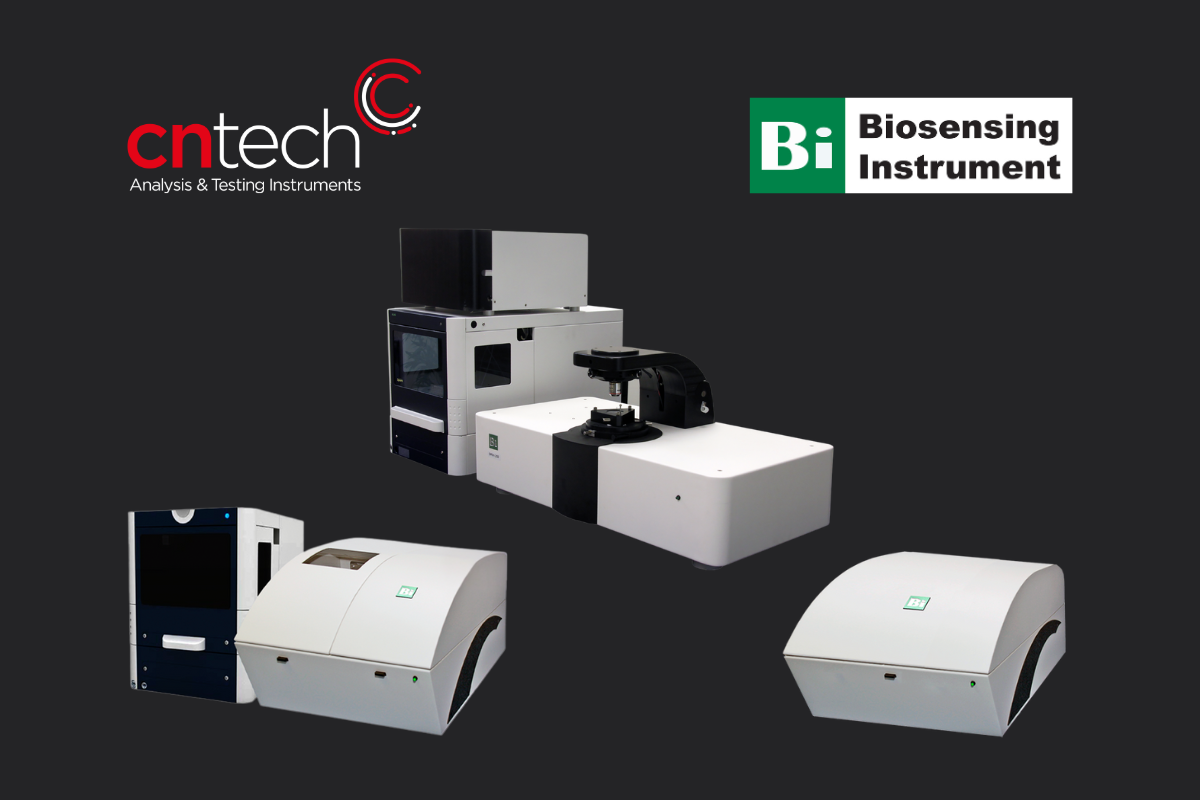
The qualities of SPR, including its high sensitivity, molecular specificity, and fast detection capability, align closely with the needs of modern MRSA surveillance programmes across Nordic countries. By adopting advanced SPR tools, research teams across the Nordic region can respond more effectively to a dynamic and continually shifting MRSA landscape. At CN Tech, we support researchers and public health laboratories with SPR platforms such as the BI-4500 Series and BI-2500 Series. These instruments combine precision fluidics, robust sensitivity, and high throughput, supporting the integration of SPR into MRSA surveillance workflows. We also have the SPRm 220, a high-resolution SPR microscopy system that delivers spatially resolved interaction data and enables researchers to observe heterogeneous bacterial binding events that are not accessible through conventional SPR modes. Its ability to visualise single-cell-level interactions, monitor how bacteria engage with membrane proteins in their native environment, and capture subtle variations in binding behaviour provides a powerful complement to standard SPR assays and enables more nuanced interpretation of increasingly diverse MRSA strains emerging across Nordic surveillance datasets. To find out more about how our SPR technologies can be incorporated into your MRSA surveillance process, contact our team today.
References
- Petersen A, Larssen KW, Gran FW, Enger H, Hæggman S, Mäkitalo B, Haraldsson G, Lindholm L, Vuopio J, Henius AE, Nielsen J, Larsen AR. Increasing Incidences and Clonal Diversity of Methicillin-Resistant Staphylococcus aureus in the Nordic Countries - Results From the Nordic MRSA Surveillance. Front Microbiol. 2021 Apr 30;12:668900. doi: 10.3389/fmicb.2021.668900. PMID: 33995333; PMCID: PMC8119743.
- Tawil N, Sacher E, Mandeville R, Meunier M. Surface plasmon resonance detection of E. coli and methicillin-resistant S. aureus using bacteriophages. Biosens Bioelectron. 2012 Aug-Sep;37(1):24-9. doi: 10.1016/j.bios.2012.04.048. Epub 2012 May 11. PMID: 22609555.
- Ucak Ozkaya G, Durak MZ, Akyar I, Karatuna O. Antimicrobial Susceptibility Test for the Determination of Resistant and Susceptible S. aureus and Enterococcus spp. Using a Multi-Channel Surface Plasmon Resonance Device. Diagnostics (Basel). 2019 Nov 15;9(4):191. doi: 10.3390/diagnostics9040191. PMID: 31731591; PMCID: PMC6963824.