

Article
Using plasma cleaners for surface contamination removal
Contaminated surfaces can disrupt processes long before a defect becomes visible. Trace residues interfere with adhesion, weaken coatings, and reduce measurement accuracy. Plasma cleaners provide a precise method for removing these layers without abrasion or chemicals. By exposing surfaces to a controlled plasma environment, plasma cleaners deliver consistent, residue-free results that support high-performance manufacturing and research. Their effectiveness translates to cleaner surfaces, fewer failures, and more reliable outcomes.
What Contaminants Do Plasma Cleaners Remove?
Plasma cleaners are built to remove:
-
Organic residues from oils, greases, photoresists, and handling
-
Particulates held by weak surface forces or environmental build up
-
Oxide layers on reactive metals such as aluminium and copper
-
Chemical remnants from etchants, adhesives, and solvents
-
Biological matter including proteins, microbial films, or cell debris
These substances can compromise surface energy, bond strength, or electrical properties. Plasma treatment addresses them without introducing secondary contamination.
The Plasma Cleaning Process
Plasma cleaning begins inside a sealed, low-pressure chamber. A process gas, often oxygen or argon, is introduced and then energised using radio frequency or microwave power. This excitation converts the gas into plasma, a reactive environment filled with ions, electrons, free radicals, and ultraviolet radiation.
As the contaminated surface interacts with the plasma, three primary actions occur simultaneously:
-
Organic residues oxidise and break down into volatile compounds like carbon dioxide and water vapor
-
Loosely bound particles are removed through mild ion bombardment that disrupts weak surface adhesion
-
Contaminant molecules are fragmented by ultraviolet radiation, making them easier to eliminate
Efficient removal of the by-products ensures a clean and stable surface, fully prepared to meet the demands of critical downstream processes. Plasma cleaners make this process repeatable and efficient, ensuring that surfaces meet the strict standards required for high-performance applications.
How Plasma Cleaners Are Used
Plasma cleaners are typically applied just before a surface undergoes a critical process. These devices can operate as standalone benchtop units, integrate with vacuum load locks, or form part of an automated production line. Operators place the part or sample inside the chamber. Then they select the gas and treatment parameters, before running the cycle through a touchscreen or software interface. This flexibility makes plasma cleaners suitable for various settings, from high-throughput manufacturing to research labs handling sensitive materials. Whether preparing a single lens or processing a tray of components, they offer a controlled, repeatable way to achieve surface cleanliness without mechanical abrasion or chemical residues.
Key Benefits of Using Plasma Cleaners
Modern plasma cleaners are engineered to support contamination-sensitive workflows with accuracy and control. Their value lies not just in what they clean, but in how they do it:
-
Non-contact cleaning: Removes contaminants without abrasion, preserving surface quality
-
A solvent-free process: Avoids residual films and reduces the burden of chemical disposal
-
Uniform treatment: Reaches into microstructures and uneven geometries with even exposure
-
Tunable parameters: Offers control over cleaning intensity and repeatability
-
Surface activation: Improves wettability and bonding performance in downstream applications
Such benefits are built into the equipment, making plasma cleaners a dependable choice for achieving cleanliness and surface readiness.
Where Plasma Cleaners Are Used
Industries that demand precision rely on plasma cleaners to uphold surface quality standards at every stage:
-
Semiconductor and electronics: Remove residual photoresist, prepare wafers, and improve solderability
-
Medical and biotech: Clean and activate device surfaces before coating, sterilisation, or packaging
-
Aerospace and automotive: Prepare composite and metal parts for adhesives and protective layers
-
Optics and photonics: Eliminate fine residues from optical elements without scratching or distorting them
When applied across these sectors, plasma cleaners provide a balance of reliability, safety, and performance that general-purpose cleaning tools can’t match.
Evactron Systems from CN Tech
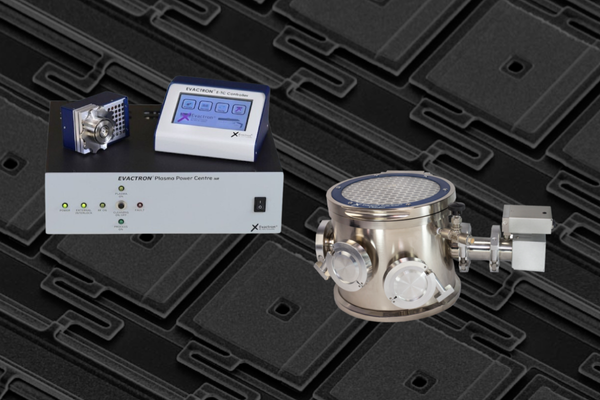
At CN Tech, we provide Evactron plasma cleaners that are engineered for reliable hydrocarbon removal in high-vacuum environments. These systems are used in electron microscopy, surface analysis, and vacuum-based manufacturing to maintain clean chamber conditions and improve imaging and analytical performance.
Our product line includes:
-
E16 and E50: Compact units with programmable RF power, ideal for cleaning SEM and FIB chambers quickly and efficiently
-
Zephyr: A dual-mode cleaner compatible with both roughing and high vacuum, developed for optical systems and sensitive sample preparation
-
SoftClean: A downstream plasma system that gently removes organic contamination from fragile or irreplaceable components
-
20EP and ES: Slim, modular systems designed for integration into load locks, benchtop instruments, and OEM vacuum platforms
Evactron systems use air or oxygen plasma to safely eliminate contaminants, avoiding abrasion and leaving no chemical residue. Their flexibility across different vacuum levels and chamber configurations ensures reliable performance in diverse settings. With consistent results and easy integration, they are well suited to the demands of both advanced instrumentation and high-throughput manufacturing.
Surface Preparation That Supports Performance
Achieving consistent results in high-precision environments begins with properly prepared surfaces. Plasma cleaning offers a reliable way to remove contamination without introducing new variables, supporting critical steps like bonding, imaging, and assembly. This capability is central to the Evactron plasma cleaners offered by CN Tech, which are designed to perform reliably in cleanroom, research, and production settings. To explore the best solution for your workflow, please get in touch.