

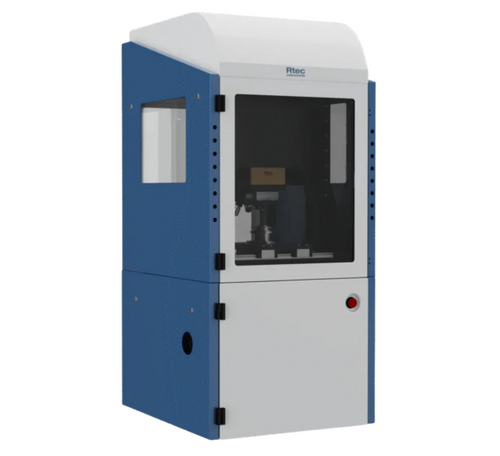
Multi Function Tribometer MFT-5000
The MFT-5000 Multi-Function Tribometer is a universal tribometer and friction wear testing machine that combines modular tribology testing with a patented in-line 3D profilometer — covering loads from nano-Newtons to 10’000 N and temperatures from −120°C to 1’200°C on a single platform.
Key Features
- Tribology Synchronized Inline 3D Surface Measurement
- Multi-Range Load Capability: Nano, Micro & Macro
- Environmental Chambers
- Interchangeable Modular Drives for Flexible Test Configurations
- From Lubricants, Coatings to Surfaces: Tribology Testing for Any Material
- Multi-Axis Load Cell Technology for Precise Force Measurement - Piezo, Capacitive
Manufacturer
Rtec Instruments
Rtec Instruments develops and manufactures advanced mechanical and surface testing and measurement solutions for research and industrial applications. They specialise in combining techniques that provide a unique perspective in material testing. Their testers include tribometer, profilometer, scratch tester, high-temperature indenter, and corrosion testers. Furthermore, their testers provide the most robust and versatile platform in the market for testing friction, wear, adhesion, hardness, roughness, and film thickness from nano to macro-scale.


Tribology Synchronized Inline 3D Surface Measurement
The in-line integrated 3D profilometer captures surface topography with nanometre resolution between test cycles. The Lambda imaging head combines white light interferometry, confocal microscopy, dark field, and bright field imaging on a single profiler head — measuring transparent, rough, smooth, and steeply sloped surfaces with ease.
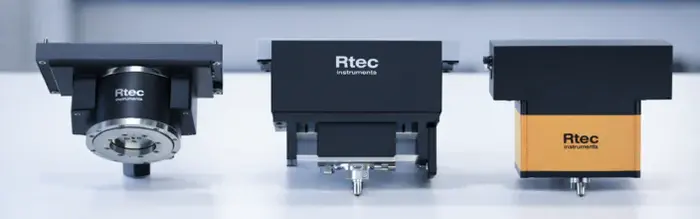
Multi-Range Load Capability: Nano, Micro & Macro
The MFT-5000 offers an exceptionally wide load range from nano to macro scales using interchangeable load cells. Automatic load cell detection and fast exchange allow users to switch quickly between ranges, enabling precise and reliable tribology testing for everything from delicate coatings to robust engineering materials and lubricants.
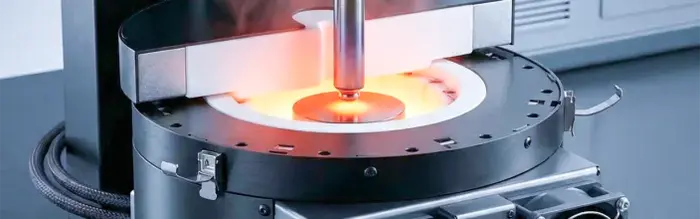
Environmental Chambers
The MFT-5000 supports tribology testing from −120°C to 1'200°C using modular environmental chambers. Available configurations include high-temperature, cryogenic, humidity, corrosion, salt spray, hydrogen charging, inert gas, and SRV chamber setups — enabling real-world condition simulation for automotive, aerospace, and energy applications.
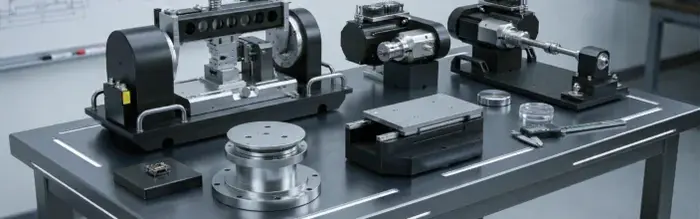
Interchangeable Modular Drives for Flexible Test Configurations
The MFT-5000 features a highly adaptable modular drive system for rapid configuration across diverse tribology tests. Each module mounts directly onto the precision platform and integrates seamlessly with the upper load frame, enabling realistic application simulations. Its flexible design allows the system to evolve with changing and demanding testing requirements.
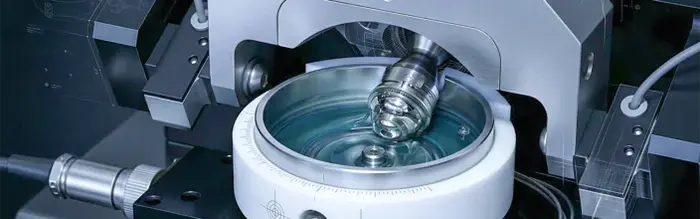
From Lubricants, Coatings to Surfaces: Tribology Testing for Any Material
The MFT-5000 is designed for tribology studies across a wide range of materials—from liquids such as lubricants, biofluids, and water to solids including metals, ceramics, hard coatings, and ultra-hard materials such as diamond. As a result, it supports both fundamental research and industrial development across diverse material systems.

Multi-Axis Load Cell Technology for Precise Force Measurement - Piezo, Capacitive
Patented capacitive and piezo load cells deliver high stability and resolution across the full load range. Sensor configurations support force measurement in 1, 2, or 6 axes. Dynamic torque sensors measure in-line torque during rotating tests, enabling accurate characterization of complex tribological interactions.
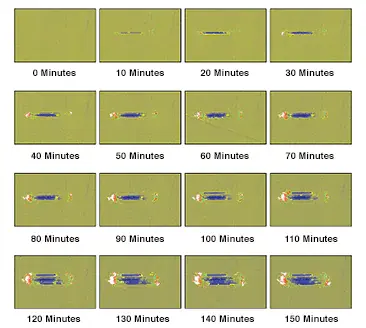
Patented In-Line 3D Optical Profilometer
Wear volume, roughness change, crack initiation, and debris accumulation — all tracked automatically as the test runs. Furthermore, the patented Lambda head integrates four optical techniques on one sensor, therefore measuring transparent films, rough metals, and steep slopes without lens changes. As a result, you get a time-synchronized record of surface evolution and friction. Additionally, the Sigma head offers a dedicated white light interferometry option.
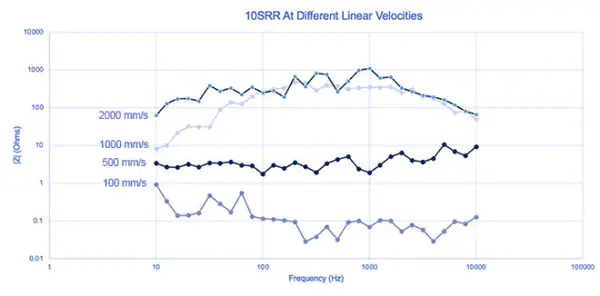
EV Tribology and Electrochemical Impedance
The MFT-5000 integrates potentiostat or AC/DC power sources to deliver currents from microamperes to several amperes during tribology testing. Furthermore, electrochemical impedance measurements identify lubrication regime boundaries and electrical contact behavior as conditions shift from ohmic to capacitive. This capability is therefore critical for EV lubricants, bearings, and drivetrain component qualification. In this application space, Multi Function Tribometer solutions prove indispensable.
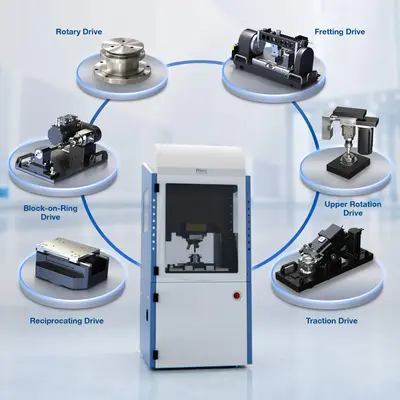
Modular Drive System
Several interchangeable drives mount on the MFT-5000’s precision XY stage with auto recognition. A few common ones are listed below. Of course, Multi Function Tribometer modularity ensures compatibility with many industry standards.
- Rotary: 0.001–10’000 rpm— pin-on-disk, ASTM G99
- Linear reciprocating: up to 80 Hz — ASTM G133, HFRR
- Fretting voice coil: 10 µm–2.8 mm, up to 300 Hz
- Traction : 0–200 N/3’000 N, ±6 m/s — EHD film thickness
- Block-on-ring: Timken, OK load, ASTM G77
- Upper rotation: four-ball EP and wear, thrust washer, KRL, ASTM D2266, D2596
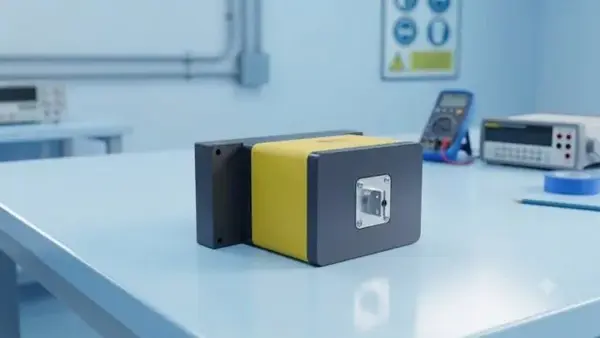
Unmatched Load Cell Technology Capacitive, Piezo
The MFT-5000 features a wide range of patented, easily interchangeable load cells — extending from nN to 10’000 N — to provide unparalleled stability and resolution across all test scales. Furthermore, these sensors are available in various configurations, including 1, 2, or 6-axis force measurement, in order to suit diverse experimental needs. For laboratory research and industrial development, Multi Function Tribometer designs set new standards for performance and reliability.
Key sensor technologies include:
-
Capacitive Load Cells: Offer the highest resolution with a rigid design for maximum precision.
-
Dynamic Torque Sensors: Engineered for accurate in-line torque measurement during rotating motions.
-
Piezo Load Cells: Provide the highest resolution coupled with high-frequency response capabilities.

Industries
- Aerospace
- Automotive
- Bio-materials
- Ceramics
- Hard Coating
- Lubricants
- Metal
- Optics and Glasses
- Pharmaceutical
- Polymer
- Semicon
Technical Information
| Load Range | nN to 10'000 N |
| Temperature Range | -120°C to 1'200°C |
| Humidity Control | 5% – 95% RH |
| Available Modules | Rotary (0.001–10'000 rpm); Linear Reciprocating (up to 80 Hz); Block on Ring; Mini Traction; Fretting |
| Integrated Sensors | Capacitive, piezo, strain gauge load cells; acoustic emission; electrical contact resistance |
| Integrated Profilometer | In-line 3D optical profilometer (Confocal, Interferometer, Dark Field, Bright Field) |
| XY Stage | Long-stroke, closed-loop XY stage for custom motions and stitching |
Applications
High Temperature (Up to 1200° C)
- Hot hardness Tester
- High Tribology Friction, Wear
Lubricants
- Electric Vehicle Tribology
- Lubricant Summary
- Mini Traction Machine
- Block on Ring
- 4-Ball EP and Wear
- HFRR
- SRV
- Grease
- Tapping Torque, Cutting, Drilling
- Piston Ring Cylinder Liner
Mechanical
- Materials Summary
- Hot Hardness
- 3,4 Point Bending
Cryogenic
- Low temperature (from -120°C)
Corrosion Testing
- Tribocorrosion
- Salt Spray
Friction Wear
- Catheter Friction Analysis
- Electric Vehicle Tribology
- Electric Connector Fretting Wear Analysis
- Rotary Pin on Disk Tribometer, Ball on Disk
- Reciprocating
- Brake Materials tribology
- Fretting
- Low Friction, Nano Tribology
- Biotribology
Coatings
- Catheter Friction Analysis
- Coatings Summary
- Scratch Test, Adhesion, Hardness
- 2D Materials, Low Friction Coatings
- Fretting
- Pin on Disk, Ball on Disk
- Reciprocating
- High Temperature Tribology up to 1200°C
- Hard Coatings, Cutting Tools
Industrial
- Brake Materials Screening
- Electric Vehicle Tribology
- Lenses
- Cutting Tools
- Piston Ring Cylinder Liner
- High Pressure Chamber
- Space Tribology
- Textile
Videos

Multi Function Tribometer MFT-5000
Downloads

Electrochemical Hydrogen Charging Cell
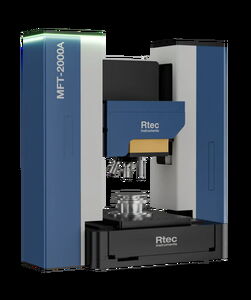
Discover the Electrochemical Hydrogen Charging Cell, an accessory for the MFT-5000 and MFT-2000 Multi Function Tribometers. Designed to enable controlled electrochemical hydrogen charging during tribological testing, it allows researchers to investigate the effects of hydrogen exposure on material friction, wear and degradation. An ideal solution for studying hydrogen embrittlement and evaluating material performance in hydrogen-related environments.

Testing Lubricants, Fuels, Greases and Metalworking Fluids
Explore our brochure on testing lubricants, fuels, greases and metalworking fluids using advanced tribological testing solutions. Discover how friction, wear and lubrication performance can be evaluated under a wide range of operating conditions to help assess product performance, optimise formulations and support quality control across industrial and automotive applications.

Multi Function Tribometer MFT-5000 Brochure
Discover the Multi Function Tribometer MFT-5000. Designed for comprehensive friction, wear and mechanical testing, this versatile modular system supports a wide range of testing configurations, from nano to macro load ranges. Featuring an integrated 3D optical profilometer, interchangeable test modules and advanced environmental control from -120°C to 1200°C, the MFT-5000 provides a powerful solution for evaluating materials, coatings and lubricants under real-world operating conditions.

Mini Traction Machines Brochure
Discover the Rtec Instruments MFT-5000 and MFT-2000 Mini Traction Machines in our brochure. These versatile tribometers provide advanced solutions for evaluating friction, traction and wear under a wide range of contact conditions. Explore their capabilities for testing lubricants, greases, materials and coatings, helping researchers assess performance, optimise formulations and better understand tribological behaviour across diverse applications.

Surface and Materials Testers Product Overview
Explore the Rtec Instruments Surface and Materials Testers Product Overview brochure, showcasing a comprehensive range of advanced testing solutions for material characterisation and surface analysis. Discover versatile systems for evaluating friction, wear, scratch resistance, mechanical properties and surface topography, supporting research, product development and quality control across a wide range of industries.

Brake Material Screening
Discover how advanced tribological testing can support brake material screening and evaluation. This application note explores methods for assessing friction, wear and material performance under controlled test conditions, helping engineers compare brake materials, understand their behaviour and support the development of safer, more reliable braking systems.

Standard Test Method for Evaluating Lubricity of Diesel Fuels by the High-Frequency Reciprocating Rig (HFRR)
Discover how the High-Frequency Reciprocating Rig (HFRR) is used to evaluate the lubricity of diesel fuels in accordance with the standard test method. This application note explores how controlled friction and wear testing measures a fuel's ability to protect contacting surfaces, helping assess lubricity performance, compare fuel formulations and support compliance with industry standards.

Standard Test Method for Evaluating Lubricity of Diesel Fuels by the Scuffing Load Ball-on-Cylinder Lubricity Evaluator (SLBOCLE)
Discover how the Scuffing Load Ball-on-Cylinder Lubricity Evaluator (SLBOCLE) is used to assess the lubricity of diesel fuels through controlled friction and wear testing. This application note explores the standard test method for determining a fuel's ability to prevent scuffing under load, helping compare fuel performance, evaluate lubricity additives and support quality control in fuel development.

Standard Test Method for Measurement of Extreme-Pressure Properties of Lubricating Fluids (Four-Ball Method)
Discover how the Four-Ball Test Method is used to evaluate the extreme-pressure properties of lubricating fluids. This application note explores how controlled load and friction testing assesses a lubricant's ability to protect surfaces against wear, scuffing and seizure under demanding conditions, helping compare formulations and support lubricant development and quality control.

Standard Test Method for Measurement of Extreme-Pressure Properties of Lubricating Grease (Four-Ball Method)
Discover how the Four-Ball Test Method is used to evaluate the extreme-pressure performance of lubricating greases. This application note explores how controlled load and friction testing assesses a grease's ability to prevent wear and withstand high-pressure contact conditions, helping compare formulations, evaluate additive performance and support product development and quality control.

Standard Test Method for Measurement of Load-Carrying Capacity of Lubricating Grease (Timken Method)
Discover how the Timken Test Method is used to evaluate the load-carrying capacity of lubricating greases. This application note explores how the test measures a grease's ability to withstand pressure and prevent wear under demanding contact conditions, helping compare lubricant performance, assess extreme-pressure additives and support grease development and quality control.

Performance Evaluation of Lubricants with Ball-on-Disk Type Rolling/Sliding Friction Tester
Discover how a Ball-on-Disk Rolling/Sliding Friction Tester can be used to evaluate lubricant performance under controlled contact conditions. This application note explores the measurement of friction, wear and lubrication behaviour across varying loads, speeds and rolling/sliding ratios, helping researchers assess lubricant effectiveness, compare formulations and optimise performance for demanding applications.

Quality Control of Hard Coatings by Scratch Testing
Discover how scratch testing can be used for quality control of hard coatings. This application note explores how controlled scratch testing evaluates coating adhesion, scratch resistance and failure behaviour, helping manufacturers assess coating durability, identify defects and ensure consistent coating quality across production processes.

Standard Test Method for Ranking Resistance of Plastics to Sliding Wear Using Block-on-Ring Wear Test - Cumulative Wear Method
Discover how the Block-on-Ring Wear Test can be used to rank the sliding wear resistance of plastics using the cumulative wear method. This application note explores how controlled sliding contact evaluates material wear over time, helping compare plastic formulations, assess durability and support material selection, product development and quality control.

Reproducibility of Scratch Testing Adhesion Using BCR-692 Standard DLC Coating
Discover how scratch testing can be used to evaluate the adhesion and reproducibility of DLC (Diamond-Like Carbon) coatings using the BCR-692 standard reference coating. This application note explores the consistency of scratch test results under controlled conditions, demonstrating the importance of standardised reference materials for reliable coating adhesion assessment, method validation and quality control.

Investigation of Scratch Adhesion and Cohesion of Hard Coatings
Discover how scratch testing can be used to investigate the adhesion and cohesion of hard coatings. This application note explores how controlled scratching identifies coating failure mechanisms, evaluates resistance to cracking and delamination, and assesses the bonding strength within coatings and at the substrate interface, supporting coating development, material characterisation and quality control.

Scratch Resistance of Chemically Strengthened Glass
Discover how scratch testing can be used to evaluate the scratch resistance of chemically strengthened glass. This application note explores how controlled testing assesses surface durability, resistance to damage and critical failure behaviour, helping compare glass performance, optimise strengthening processes and support material development and quality control.

Scratch Testing Analysis of Automotive Paints
Discover how scratch testing can be used to analyse the durability and performance of automotive paint coatings. This application note explores how controlled scratch testing evaluates scratch resistance, coating adhesion and failure behaviour, helping manufacturers compare paint formulations, assess surface protection and improve coating quality and durability.

Scratch Testing Analysis of Thermal Spray Coatings
Discover how scratch testing can be used to evaluate the mechanical performance of thermal spray coatings. This application note explores how controlled scratch testing assesses coating adhesion, cohesive strength and resistance to cracking or delamination, helping researchers compare coating performance, identify failure mechanisms and support process optimisation and quality control.

Standard Test Method for Wear Preventive Characteristics of Lubricating Fluid (Four-Ball Method)
Discover how the Four-Ball Test Method is used to evaluate the wear-preventive characteristics of lubricating fluids. This application note explores how controlled load and sliding contact assess a lubricant's ability to minimise wear and protect surfaces under demanding conditions, helping compare lubricant formulations, evaluate additive effectiveness and support product development and quality control.

Standard Test Method for Wear Preventive Characteristics of Lubricating Grease (Four-Ball Method)
Discover how the Four-Ball Test Method is used to evaluate the wear-preventive characteristics of lubricating greases. This application note explores how controlled load and sliding contact assess a grease's ability to minimise wear and protect metal surfaces, helping compare formulations, evaluate additive effectiveness and support grease development and quality control.

Wear Resistance of Screen Protector Tempered Glass
Discover how advanced wear testing can be used to evaluate the durability of tempered glass screen protectors. This application note explores how controlled friction and wear testing assesses surface resistance, scratch damage and coating performance, helping compare materials, evaluate protective treatments and support product development and quality control.

Standard Test Method for Wear Testing with a Pin-on-Disk Apparatus
Discover how the Pin-on-Disk Test Method is used to evaluate the friction and wear characteristics of materials under controlled sliding conditions. This application note explores how testing at defined loads, speeds and distances measures wear resistance and friction behaviour, helping compare material performance, assess coatings and support product development and quality control.
Related Products
Service Support
Comprehensive repairs and servicing
Annual Support Programs
Your metrology instrumentation is a major investment that is critical to your business operation and success. In today’s competitive climate, it is more important than ever to extend the functionality and peak performance of your metrology equipment years beyond the expiration of your factory warranty. CN Tech’s Support Programs will help ensure that your investment is protected, and that you and your instrument’s are always operating at peak performance.
With over 20 years’ experience servicing and repairing you can be assured that your system is in safe hands. The independent services we offer include system relocation, maintenance visits, parts and consumables, and break down interventions.
CN Tech’s Support Programs are an economical way to guarantee optimal working condition:
- Annual Preventive Maintenance
- Priority Technical Assistance
- Preferred Parts Availability
- On-Site User Training
- Remote Diagnostics
- No surprise repair expense and much more!
Support Contact Example
An example of our service and support contracts are shown below:

Metrology & Instrumentation Annual Support Programs 2024/25
CN Tech's Support Programs will help ensure that your investment is protected, and that you and your instrument’s are always operating at peak performance.