

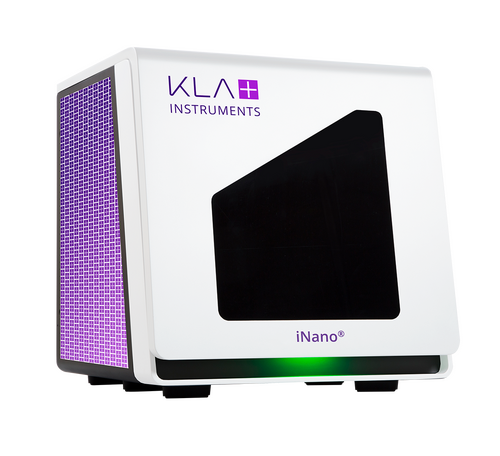
iNano® Nanoindenter
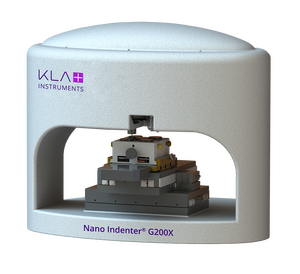
An easy to operate, highly accurate solution for performing nanoscale mechanical tests on thin films and soft materials. Setup and measurement is fast and efficient, across a wide range of test types. Visualise mechanical properties with NanoBlitz 3D and 4D property mapping and the remote video option.
Key Features
- InForce 50 actuator for capacitance displacement measurement and electromagnetic force actuation with interchangeable tips
- Unique software-integrated tip-calibration system for fast, accurate tip calibration
- InQuest high speed controller electronics with 100kHz data acquisition rate and 20µs time constant
- XY motion system with easy mounting magnetic sample holder
- Integrated microscope with digital zoom for precise indentation targeting
- ISO 14577 & standardised test methods
- InView software package with RunTest, ReviewData, InFocus reporting, InView University online training and InView mobile application
Manufacturer
KLA
A global technology leader who make an impact by creating solutions that drive progress and transform industries. Collaboration is the key to their success. KLA provide leading-edge technology and devices using advanced inspection tools, metrology systems, and computational analytics. Their solutions accelerate tomorrow’s electronic devices. They enable evolution and innovation in the data era across key industries including automotive, mobile and data centre.

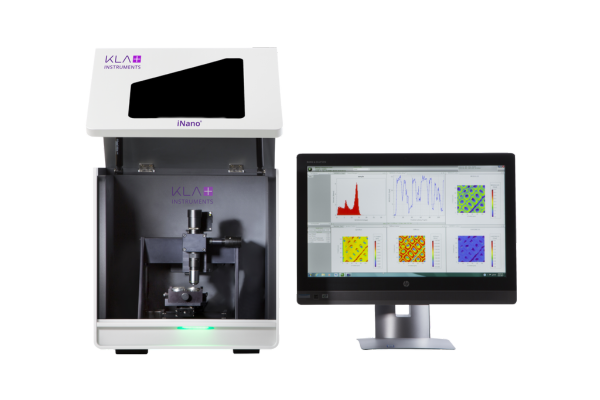
Make Nano Indentation Simple
KLA’s iNano® Nano Indenter is powered by the InView software package, which provides a modern and flexible interface to interact with nano indentation systems. In under a minute even inexperienced users can configure mechanical testing with InView’s guided setup. InView supports a wide selection of standard mechanical test procedures out of the box. Additional test methods for novel materials or new experiments can be programmed by users, and InView provides full control over all test parameters.
To ensure every user can maximise the potential of nano indentation, KLA provides access to a comprehensive learning portal with each instrument. A range of online webinars and documentation, covering both fundamental principles and advanced applications is available.
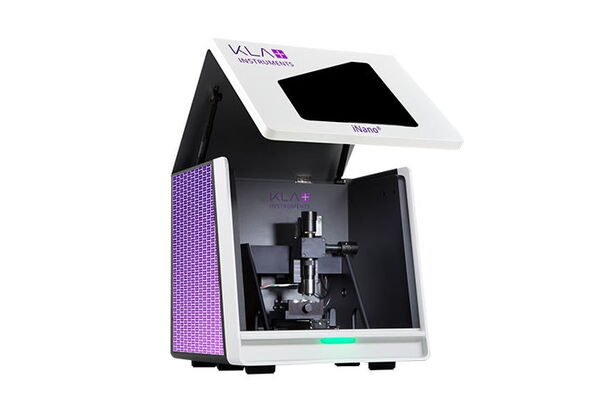
Flexibility to Suit All Applications
The iNano has been designed to be modular and customisable, with a range of options to adapt to almost any application. A sample heating chamber is available, which has a maximum heating temperature of 300°C. Samples are heated uniformly, with precision temperature control. Sample heating can be used together with many of the iNano’s mechanical testing modes.
To ensure maximum performance for high-sensitivity applications, an active vibration isolation system can be added. The isolation provides vibration reduction in six degrees of freedom, with no complicated setup or tuning required. A remote video option is also available, providing additional viewing angles inside the iNano’s chamber.
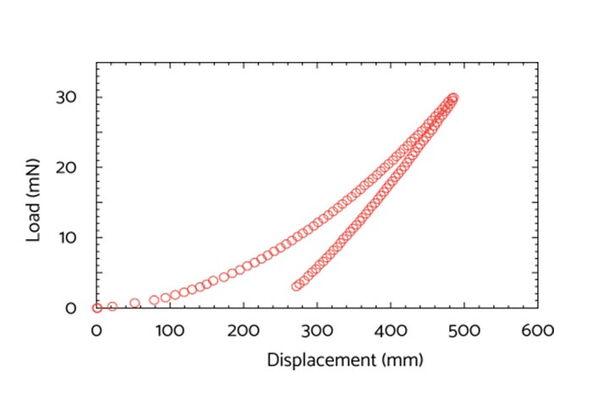
A Comprehensive Suite of Mechanical Tests
The iMicro supports a wide range of mechanical test types. Hardness and modulus tests (Oliver-Pharr) can be performed on a wide range of materials, including soft materials such as ultra-soft gels. Full support for ISO 14577 hardness testing is also included as standard. Scratch and wear tests can be performed on a broad set of materials, including thin films and polymers.
For more advanced testing, the iNano can be configured for Continuous Stiffness Measurement (CSM), substate-independent thin film measurement with AccuFilm™, and ProbeDMA™ for testing viscoelastic properties of polymers. A package is also available providing complex modulus measurement for biomaterials.
Fast & Accurate Measurement
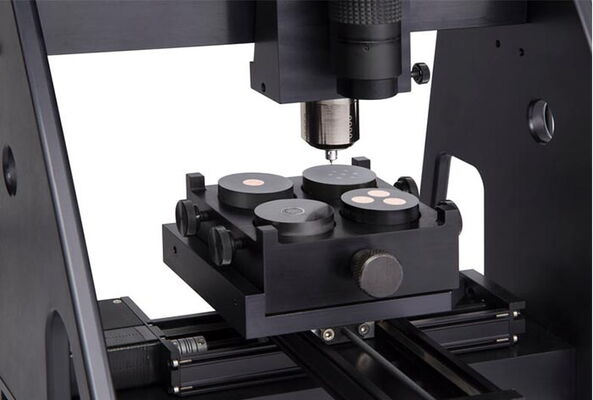
With the iNano, nanoscale mechanical testing is quick and reliable. The InForce actuator design used by KLA is based on electromagnetic force actuation and capacitance displacement technology. This design allows for the force actuation and displacement measurement to be decoupled, making it possible to independently optimise them to maximise performance. InForce actuators have a high stiffness and maximised vertical stability and feature the highest calibration stability on the market.
To further ensure accuracy, regardless of material or load, the iNano uses a high-stiffness carbon fibre gantry. Passive vibration isolation is integrated into the iNano enclosure, providing a low noise floor during measurement.
Visualise Mechanical Properties with NanoBlitz 3D & NanoBlitz 4D
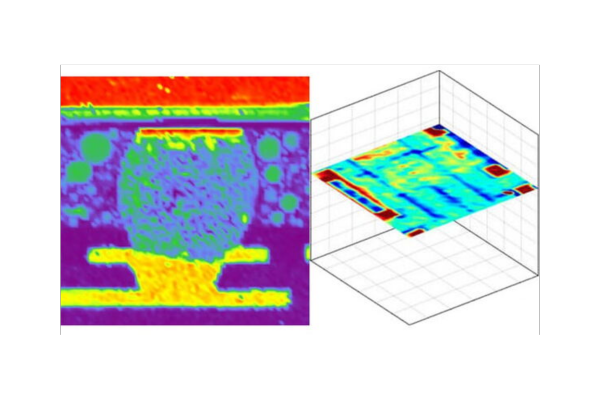
3D nanomechanical property maps can be generated with NanoBlitz 3D. Using the iNano’s motorised XY stage, NanoBlitz 3D uses an array of up to 100,000 indents to produce a property map of a sample region. Young’s modulus, hardness, and stiffness values are recorded for each indent. NanoBlitz 3D is fast, with each indent taking less than 1 second to perform, including stage movement.
By expanding the iNano’s Continuous Stiffness Measurement (CSM) capability, NanoBlitz 4D is able to generate mechanical property tomography. By performing up to 10,000 indents at 5 to 10 seconds per indent, mechanical properties can be visually mapped at multiple depths. Young’s modulus, hardness, and stiffness values are recorded as a function of depth for each indent.
Shown left: NanoBlitz 3D image showing hardness mapping
Shown right: NanoBlitz 4D mapping at two different depths

Industries
- Semiconductor and packaging industries
- Universities, research labs and institutes
- Polymers and plastics
- MEMS: Micro-electro-mechanical systems/nanoscale universal testing
- Ceramics and glass
- Biomaterials and pharmaceuticals
- Coatings and paints
- Polymer manufacturing
- Composites
Applications
Hardness and modulus measurements (Oliver-Pharr)
Mechanical characterisation is critical in the process and manufacture of films, including the quality of coatings in the automotive industry, as well as during process control of front-end and back-end semiconductor manufacturing.
The iNano nanoindenter is capable of measuring hardness and modulus for a wide variety of materials, from ultra-soft gels to hard coatings. The high-speed assessment of these properties enables quality control and assurance on production lines.
Thin Film Characterisation
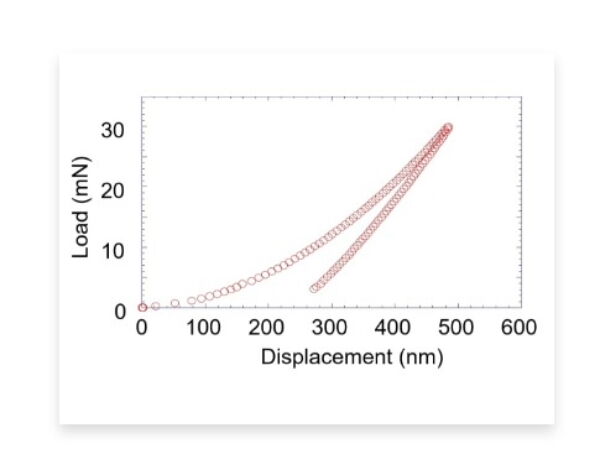
The mechanical properties of thin films include not only hardness and modulus, but also the performance of films over time and under load, which can result in delamination, fracture, and crack propagation. The iNano nanoindenter test methods are designed to provide valuable data in the characterisation of thin film behaviour.

High speed material property maps
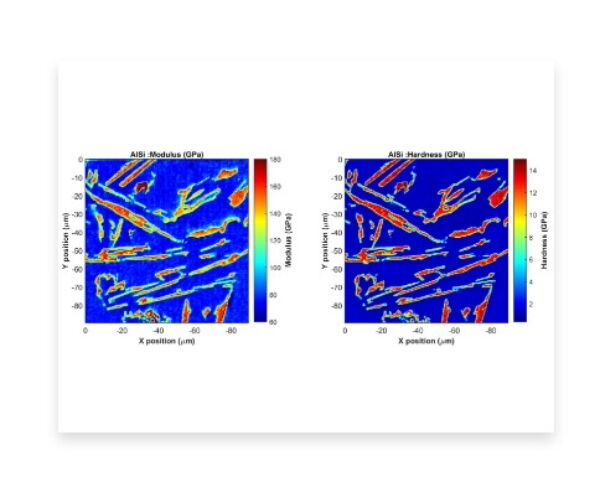
For many materials, including composites, the mechanical properties may vary widely from one area to the next. The iNano provides a sample stage movement of 100mm in the X and Y axes, and 25mm in the Z axis, allowing testing of a wide range of sample heights over a large sample area. The optional NanoBlitz Topography and Tomography software can quickly generate colour maps of any of the measured mechanical properties.
ISO 14577 hardness testing
The iNano nanoindenter includes a pre-written ISO 14577 Test Method that measures material hardness in compliance with the ISO 14577 standard. This test method automatically measures and reports Young’s modulus, instrumented hardness, Vickers hardness and the normalized work-of-indentation.
Polymer tan delta, storage and loss modulus
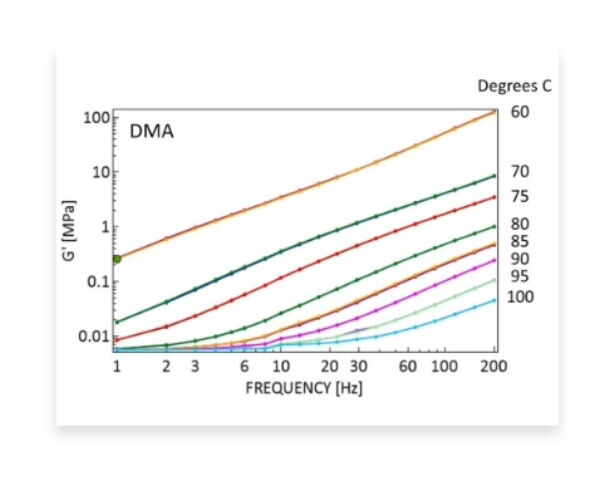
The iNano nanoindenter is capable of measuring both tan delta and the storage and loss modulus for ultra-soft materials, including viscoelastic polymers. Storage and loss modulus and tan delta are important properties of viscoelastic polymers, whose energy is stored as elastic energy and dissipated as heat. Both of these metrics measure energy dissipation in a given material.
High Temperature Nanoindentation Testing
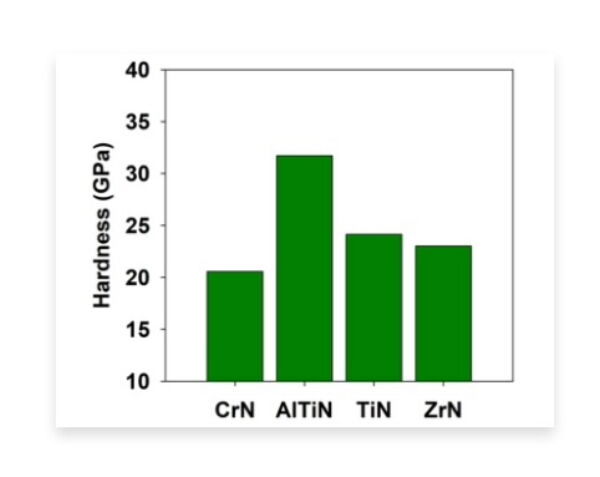
Nanoindentation at elevated temperatures is critical to characterizing material performance under thermal stress, especially for quantifying failure mechanisms during thermomechanical processing. Varying the sample temperature during mechanical testing enables not only measurement of thermal-induced behavioural changes, but also quantification of the transition plasticity of materials that are not easily tested on the nano-scale.
Industry
Semiconductor Wafers
Semiconductor manufacturers often strive to produce thin films with high mechanical integrity, but low film flexibility can lead to cracking or delamination. Undetected defects at the substrate and epitaxial layers can also result in latent defect and crack propagation, which can lead to device failure. KLA nanoindenters can measure elastic modulus and hardness of the thinnest films, as well as fracture toughness and cracking threshold, all without artefacts from the underlying substrate. Correlating nanomechanical properties to process parameters is critical to maximise semiconductor device yield.

Semiconductor Packaging
The performance and lifetime of an electronic component can depend upon the integrity of its packaging. KLA nanoindenters allow semiconductor packaging manufacturers to assess the mechanical properties of polymer underfills, solder strain-rate sensitivity, and the strength of metallic components.

Polymers and Plastics
Polymers and plastics are used in many applications due to their time-dependent deformation properties. Whether used as vibration dampers, extrusion materials, or medical implants, polymers are often analysed via dynamic mechanical analysis (DMA). In many cases, the geometries of plastic components are not suitable for traditional DMA instruments. KLA nanoindenters are able to locally target areas on a plastic component and examine frequency-dependent storage and loss moduli and loss factors regardless of the geometry of the sample. Viscoelastic creep and stress relaxation properties can also be measured with the iNano.

Ceramics and Glasses
Ceramics and glasses are important materials used in many applications for their unique optical, mechanical, and electrical properties. Traditional mechanical testing of ceramics and glasses (e.g., 4-point bending) can be time-consuming and expensive. The iNano allows for rapid characterisation of elastic modulus and hardness of small volumes of material. The scratch testing capability of nanoindenters is also well-suited to quantitatively assess the scratch resistance of optical coatings.
Pharmaceuticals and Biomaterials
The mechanical properties of biomaterials and pharmaceuticals are strongly linked to performance and customer experience, respectively. The elastic modulus or stiffness of a material can be related to texture and feel. The mechanical properties of coatings are also critical to on-time drug delivery. The iNano nanoindenter provides quantitative information that supplements qualitative customer feedback.

Nanoscale Universal Testing
The iNano nanoindenter systems are capable of measuring nanoscale mechanical deformation and other nanomechanical properties. Measurement of nanoindentation, compression, tension, creep, stress relaxation, and fatigue are examples of the iNano’s versatile capabilities. Standard and custom experimental methods are supported. The dedicated scientists in the nanoindenter group at KLA are also available for consulting and experiment design.
Videos
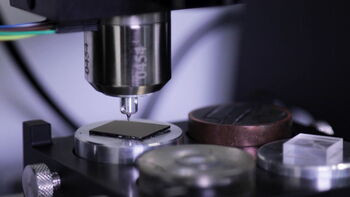
iNano® Nano Indenter

Nano Indenters
Downloads
iNano® Nano Indenter Brochure
Discover the KLA iNano® Nanoindenter in our product brochure. Designed for fast, accurate nanoscale mechanical testing, the iNano provides comprehensive characterisation of thin films, coatings, polymers and soft materials. Featuring advanced InForce 50 technology, intuitive InView software, integrated optical microscopy and optional NanoBlitz 3D and 4D property mapping, it enables precise measurement of hardness, elastic modulus, scratch resistance and viscoelastic properties. With flexible testing configurations and optional high-temperature capabilities up to 300°C, the iNano offers a powerful solution for materials research, product development and quality control.
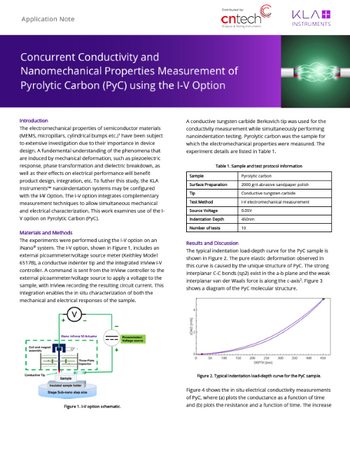
Concurrent Conductivity and Nanomechanical Properties Measurement of Pyrolytic Carbon (PyC) using the I-V Option
Discover how the KLA iNano® Nanoindenter with the I-V (current-voltage) option enables simultaneous measurement of electrical conductivity and nanomechanical properties in pyrolytic carbon (PyC). This application note explores how electrical measurements can be combined with nanoindentation to investigate the relationship between mechanical deformation and electrical behaviour. By capturing conductivity, resistance and mechanical response in situ, the technique provides valuable insight into the electromechanical properties of advanced materials and supports materials research and development.
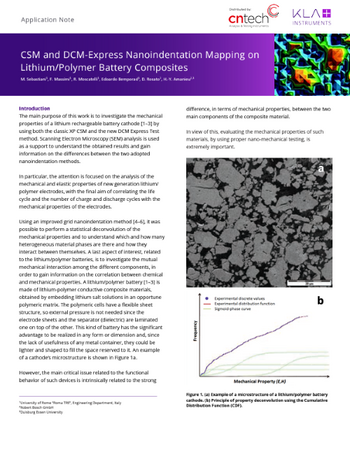
CSM and DCM-Express Nanoindentation Mapping On Lithium/Polymer Battery Composites
Discover how Continuous Stiffness Measurement (CSM) and DCM-Express nanoindentation techniques can be used to characterise lithium/polymer battery composites. This application note explores the mapping of hardness and elastic modulus across heterogeneous electrode materials, revealing the mechanical properties and distribution of individual material phases. By comparing conventional CSM and high-speed DCM-Express testing, it demonstrates how rapid, high-resolution nanoindentation mapping can provide valuable insights into battery material performance, microstructure and degradation.
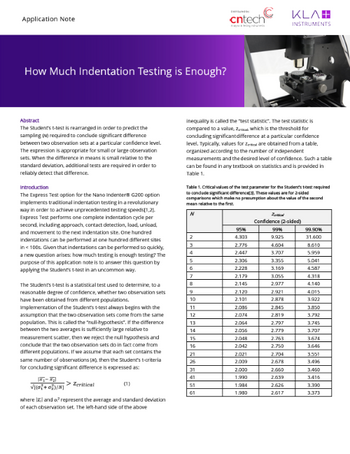
How Much Indentation Testing is Enough?
Discover how statistical analysis can help determine the appropriate number of indentations required for reliable nanoindentation testing. This application note explores the use of Student's t-test to establish the sample size needed to identify statistically significant differences between material properties at a given confidence level. It also highlights how high-speed Express Test technology enables more measurements in less time, improving statistical sensitivity and supporting accurate, efficient material characterisation.
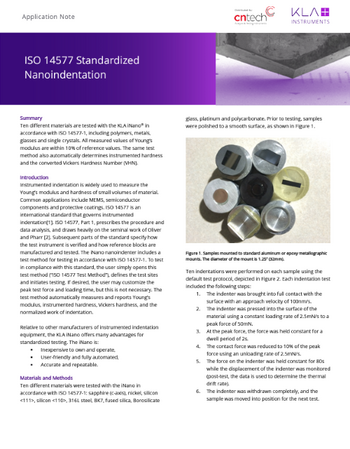
ISO 14577 Standardised Nanoindentation
Discover how the KLA iNano® Nanoindenter can perform standardised nanoindentation testing in accordance with ISO 14577. This application note explores the measurement of Young's modulus, instrumented hardness and Vickers hardness across a range of materials, including metals, polymers, glasses and single crystals. Demonstrating the accuracy and repeatability of the iNano, it highlights a straightforward, automated approach to reliable mechanical characterisation and internationally standardised materials testing.
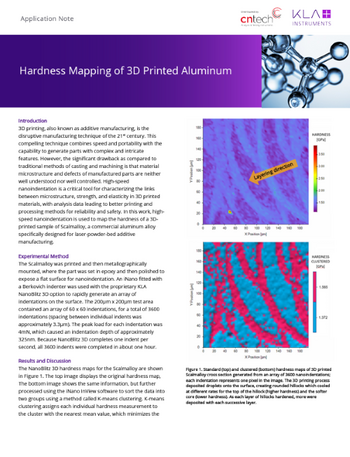
Hardness Mapping of 3D Printed Aluminium
Discover how nanoindentation mapping can be used to evaluate the hardness variations within 3D printed aluminium. This application note explores how high-resolution mechanical testing reveals local differences in hardness associated with the material's microstructure and additive manufacturing process. By mapping mechanical properties across the printed material, researchers can gain valuable insights into material uniformity, microstructural variations and the relationship between manufacturing conditions and mechanical performance.
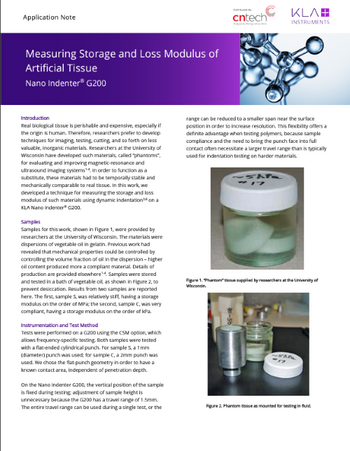
Measuring Storage and Loss Modulus of Artificial Tissue
Discover how nanoindentation can be used to measure the storage and loss modulus of artificial tissue, providing insight into its viscoelastic mechanical behaviour. This application note explores how dynamic mechanical testing characterises the material's elastic and energy-dissipating properties, helping researchers evaluate tissue-like materials, compare formulations and support the development of biomaterials and medical devices.
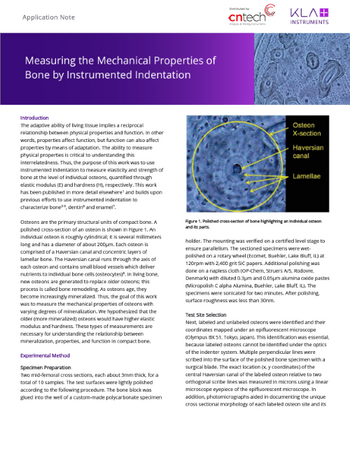
Measuring the Mechanical Properties of Bone by Instrumented Indentation
Discover how instrumented indentation can be used to characterise the mechanical properties of bone at the micro- and nanoscale. This application note explores how precise indentation testing measures hardness and elastic modulus, providing insight into bone strength, stiffness and local mechanical variations. The technique offers valuable information for understanding bone structure, investigating biomaterials and supporting research into bone health and material performance.
Continuous Stiffness Measurement (CSM)
Discover the benefits of Continuous Stiffness Measurement (CSM), an advanced nanoindentation technique that enables continuous measurement of mechanical properties as a function of indentation depth. This application note explores how CSM provides detailed hardness and elastic modulus profiles, helping researchers investigate material behaviour, identify surface effects and characterise thin films, coatings and heterogeneous materials with greater precision.
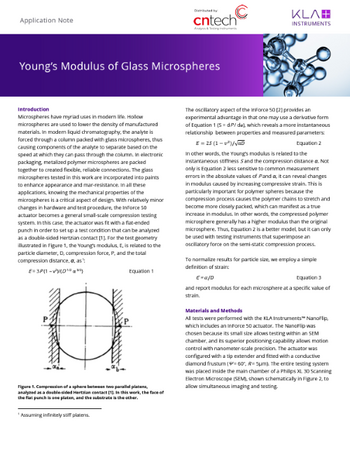
Young’s Modulus of Glass Microspheres
Discover how nanoindentation can be used to measure the Young's modulus of glass microspheres. This application note explores how precise mechanical testing characterises the elastic properties of individual microspheres, providing insight into their stiffness and mechanical behaviour. The technique offers a reliable approach to evaluating small-scale material properties and supporting the development and quality control of advanced glass materials.
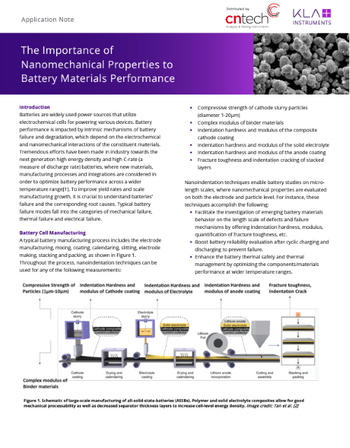
The Importance of Nanomechanical Properties to Battery Materials Performance
Discover why nanomechanical properties play a vital role in the performance, durability and reliability of battery materials. This application note explores how nanoindentation techniques can measure hardness, elastic modulus and mechanical behaviour in battery components, providing valuable insight into material deformation, degradation and structural integrity. Learn how advanced mechanical characterisation supports battery research, material development and the optimisation of next-generation energy storage technologies.
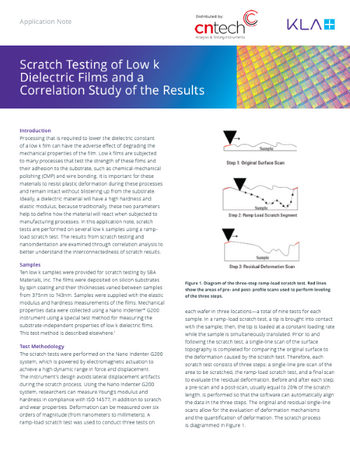
Scratch Testing of Low k Dielectric Films and a Correlation Study of the Results
Discover how scratch testing can be used to evaluate the mechanical integrity and adhesion of low-k dielectric films. This application note explores how controlled scratch testing identifies critical failure points, coating damage and delamination, alongside a correlation study comparing test results. The findings provide valuable insight into the reliability of low-k dielectric materials, supporting semiconductor research, process optimisation and thin-film quality assessment.
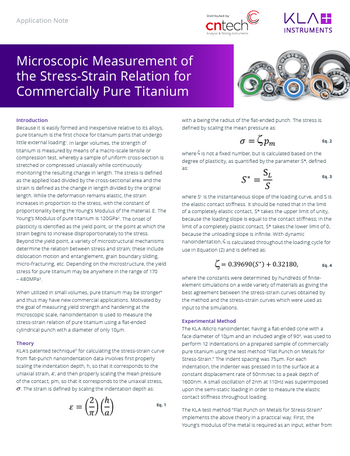
Microscopic Measurement of the Stress-Strain Relation for Commercially Pure Titanium
Discover how instrumented indentation can be used to investigate the microscopic stress-strain behaviour of commercially pure titanium. This application note explores how advanced mechanical testing measures the material's response to applied loads, providing insight into its elastic and plastic deformation properties. The technique offers a valuable approach to characterising local mechanical behaviour, supporting materials research, engineering applications and the development of titanium components.
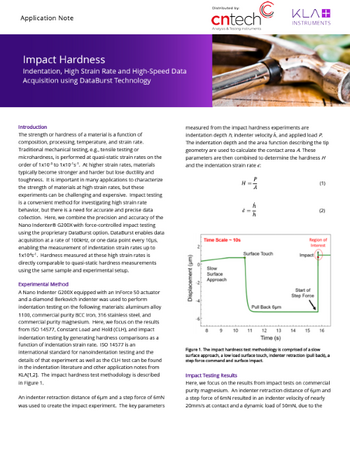
Impact Hardness: Nanoindentation, High Strain Rate and High-Speed Data Acquisition using DataBurst Technology
Discover how advanced nanoindentation techniques can be used to investigate impact hardness and material behaviour at high strain rates. This application note explores the combination of high-speed mechanical testing and DataBurst™ technology to capture rapid material responses with exceptional temporal resolution. By enabling high-speed data acquisition during dynamic indentation, the technique provides valuable insight into hardness, deformation and mechanical behaviour under impact conditions, supporting advanced materials research and characterisation.
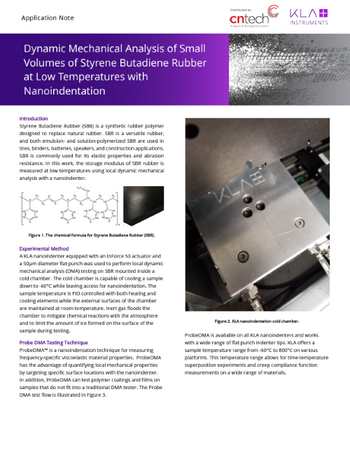
Dynamic Mechanical Analysis of Small Volumes of Styrene Butadiene Rubber at Low Temperatures with Nanoindentation
Discover how nanoindentation can be used to perform dynamic mechanical analysis of small volumes of Styrene Butadiene Rubber (SBR) at low temperatures. This application note explores how dynamic indentation techniques measure the viscoelastic properties of elastomeric materials, including storage and loss modulus, across varying temperature conditions. The approach enables precise characterisation of small sample volumes, providing valuable insight into the mechanical behaviour of polymers and supporting advanced materials research and development.
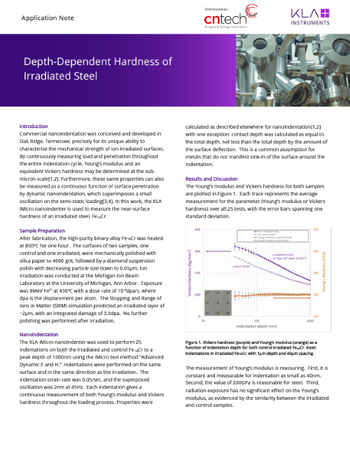
Depth-Dependent Hardness of Irradiated Steel
Discover how nanoindentation can be used to investigate the depth-dependent hardness of irradiated steel. This application note explores how indentation testing measures hardness variations at different depths, providing insight into the effects of irradiation on the material's mechanical properties and deformation behaviour. The technique offers a valuable approach to understanding material degradation, evaluating structural integrity and supporting research into advanced materials for demanding environments.
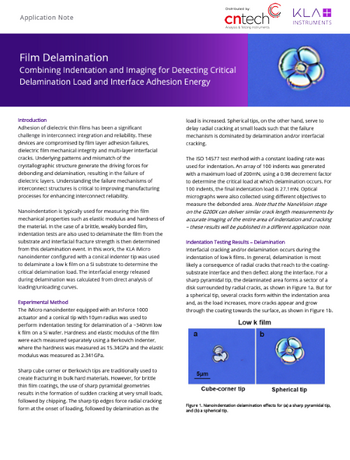
Film Delamination: Combining Nanoindentation and Imaging for Detecting Critical Delamination Load and Interface Adhesion Energy
Discover how nanoindentation combined with advanced imaging techniques can be used to investigate thin-film delamination and interface adhesion. This application note explores how controlled indentation testing identifies the critical load required to initiate film delamination and evaluates interface adhesion energy. By correlating mechanical measurements with imaging analysis, the technique provides valuable insight into coating failure mechanisms, interfacial strength and thin-film reliability, supporting materials research and coating development.
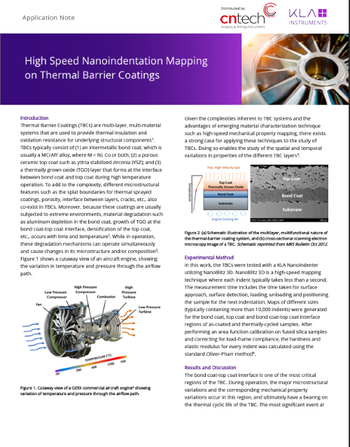
High Speed Nanoindentation Mapping on Thermal Barrier Coatings
Discover how high-speed nanoindentation mapping can be used to characterise the mechanical properties of thermal barrier coatings. This application note explores how rapid, high-resolution indentation measurements map variations in hardness and elastic modulus across coating microstructures. By revealing local mechanical differences and material inhomogeneities, the technique provides valuable insight into coating performance, structural integrity and durability, supporting advanced materials research and quality control.
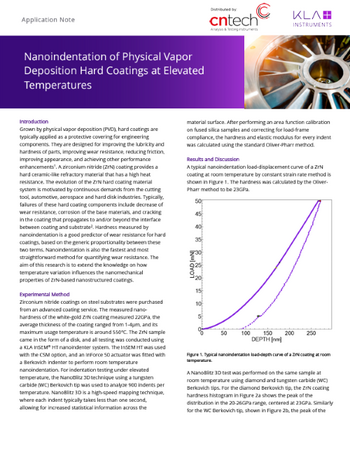
Nanoindentation of Physical Vapor Deposition Hard Coatings at Elevated Temperatures
Discover how high-temperature nanoindentation can be used to evaluate the mechanical properties of Physical Vapour Deposition (PVD) hard coatings at elevated temperatures. This application note explores how indentation testing measures hardness and elastic modulus under controlled thermal conditions, providing insight into coating behaviour as temperatures increase. The technique supports the assessment of thermal stability, mechanical performance and coating durability, helping researchers optimise hard coatings for demanding industrial applications.
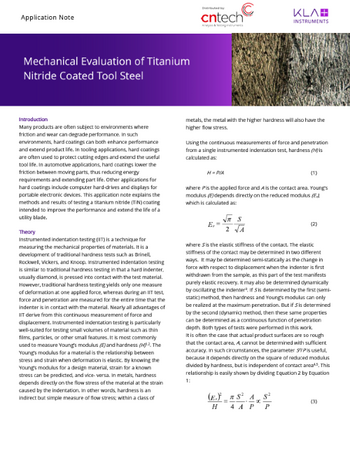
Mechanical Evaluation of Titanium Nitride Coated Tool Steel
Discover how nanoindentation can be used to evaluate the mechanical properties of titanium nitride (TiN) coated tool steel. This application note explores how instrumented indentation measures coating hardness and elastic modulus, providing insight into the mechanical performance of the coating and underlying substrate. The technique supports the assessment of coating quality, mechanical integrity and wear resistance, helping optimise hard-coated tooling for demanding industrial applications.
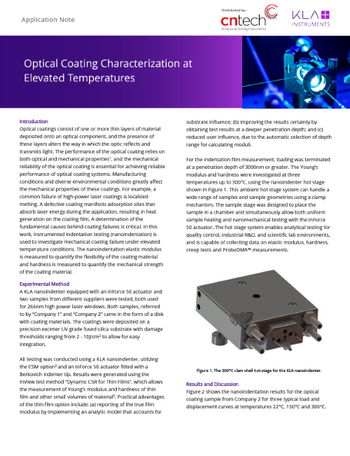
Optical Coating Characterisation at Elevated Temperatures
Discover how nanoindentation can be used to characterise the mechanical properties of optical coatings at elevated temperatures. This application note explores how high-temperature testing measures hardness and elastic modulus under controlled thermal conditions, providing insight into coating stability and mechanical performance as temperatures increase. The technique supports the evaluation of coating durability, thermal response and material reliability, helping advance the development of optical coatings for demanding applications.

Tracking Temperature-induced Nano-structural Changes of Concrete by High-temperature Nanoindentation
Discover how high-temperature nanoindentation can be used to investigate temperature-induced nanostructural changes in concrete. This application note explores how measuring hardness and elastic modulus at elevated temperatures reveals changes in the mechanical properties of concrete's individual phases. By tracking these variations, researchers can gain valuable insight into thermal degradation, microstructural evolution and material performance, supporting the development of more durable construction materials and improved fire-resistance assessment.
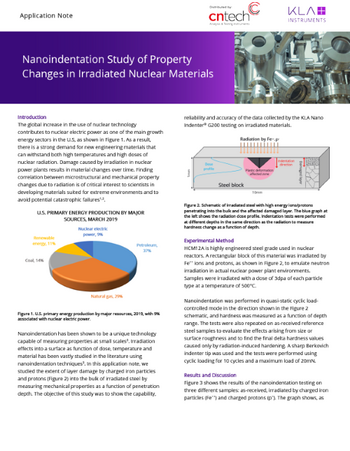
Nanoindentation Study of Property Changes in Irradiated Nuclear Materials
Discover how nanoindentation can be used to investigate changes in the mechanical properties of irradiated nuclear materials. This application note explores how precise indentation testing measures hardness and elastic modulus, revealing the effects of irradiation on material deformation and mechanical behaviour. By characterising local property changes, the technique provides valuable insights into radiation-induced damage, material degradation and structural integrity, supporting nuclear materials research and the development of more reliable materials for demanding environments.
Measuring Viscoelastic Properties of Silicone Gel Coatings on MEMS-based Sensors
Discover how nanoindentation can be used to measure the viscoelastic properties of silicone gel coatings on MEMS-based sensors. This application note explores how dynamic mechanical testing characterises the elastic and time-dependent response of soft silicone materials, including storage and loss modulus. The technique provides valuable insight into coating performance, mechanical stability and deformation behaviour, supporting the development and reliability assessment of advanced MEMS devices and sensor technologies.
Complex Shear Modulus of Compliant Biomaterials
Discover how the KLA iNano® Nanoindenter can be used to measure the complex shear modulus of compliant biomaterials. This application note explores how Continuous Stiffness Measurement (CSM) and the dedicated Biomaterials Method Pack characterise the viscoelastic properties of soft materials, including their elastic and energy-dissipating behaviour. Offering precise mechanical characterisation of small-scale biological samples, the technique supports biomaterials research and the development of advanced medical and tissue engineering applications.
Nanoindenter Tips Application Note
Discover how the selection and use of nanoindenter tips influence the accuracy and reliability of nanomechanical testing. This application note explores different indenter geometries, their applications and the importance of tip calibration, helping researchers choose the right tip for precise characterisation of material properties.
A Critical Assessment of the Effect of Indentation Spacing on the Measurement of Hardness and Modulus
Discover how indentation spacing can influence the accuracy of nanoindentation measurements. This application note critically examines the effects of spacing between indents on measured hardness and elastic modulus, highlighting the importance of appropriate test spacing to minimise interactions between indentations and ensure reliable, repeatable results.
Cross-Sectional DMA Testing on Automotive Tires Using Continuous Stiffness Measurement on Nanoindentation
Discover how nanoindentation can be used to evaluate the dynamic mechanical properties of automotive tyres through cross-sectional testing. This application note explores the use of Continuous Stiffness Measurement (CSM) to assess variations in storage and loss modulus across different tyre regions, providing valuable insight into material behaviour and performance. The technique enables detailed mechanical characterisation of tyre components at the microscale.
Effect of Annealing on 50nm Gold Films
Discover how annealing influences the mechanical properties of 50 nm gold films. This application note explores changes in hardness and elastic modulus following heat treatment, demonstrating how nanoindentation can be used to investigate the effects of thermal processing on thin-film behaviour and performance.
In Vitro Complex Shear Modulus of Bovine Muscle Tissue (Steak)
Discover how nanoindentation can be used to measure the complex shear modulus of bovine muscle tissue in vitro. This application note explores the viscoelastic behaviour of steak tissue, using dynamic mechanical analysis to assess its elastic and energy-dissipating properties. The results demonstrate the potential of nanoindentation for characterising the mechanical response of soft biological tissues.
Instrumented Indentation Testing with the KLA Nano Indenter® systems
Discover the capabilities of KLA Nano Indenter® systems for instrumented indentation testing. This application note explores how advanced indentation techniques measure key mechanical properties, including hardness and elastic modulus, providing accurate, repeatable characterisation of materials ranging from thin films and coatings to bulk materials.
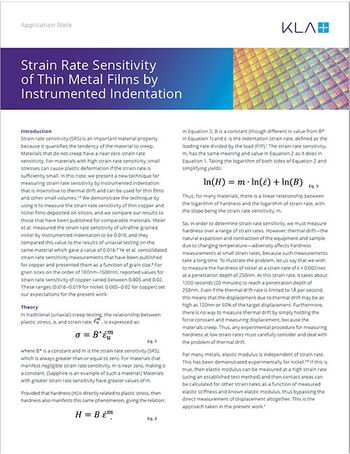
Strain Rate Sensitivity of Thin Metal Films by Instrumented Indentation
Discover how instrumented indentation can be used to evaluate the strain rate sensitivity of thin metal films. This application note explores how changes in indentation loading rate influence measured hardness and mechanical response, providing insight into the rate-dependent deformation behaviour of metallic thin films and supporting their characterisation for advanced applications.
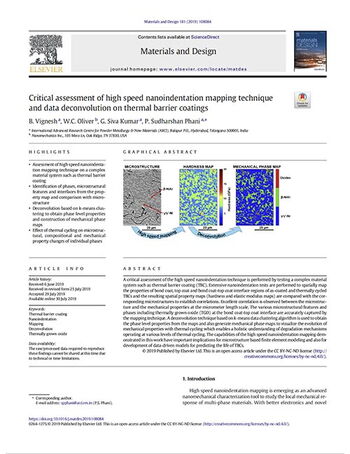
Critical Assessment of High Speed Nanoindentation Mapping Technique and Data Deconvolution
Discover how high-speed nanoindentation mapping can reveal variations in the mechanical properties of heterogeneous materials. This application note critically assesses the technique and its associated data deconvolution methods, exploring their impact on measurement accuracy, spatial resolution and the interpretation of mechanical property maps. It provides valuable insight into the capabilities and limitations of high-throughput nanomechanical characterisation.
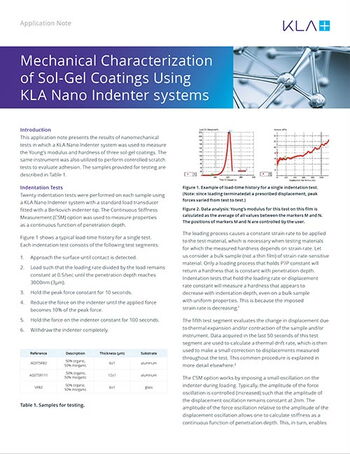
Mechanical Characterisation of Sol-Gel Coatings Using KLA Nano Indenter systems
Discover how KLA Nano Indenter® systems can be used to mechanically characterise sol-gel coatings. This application note explores the measurement of key properties, including hardness and elastic modulus, providing insight into coating performance, mechanical integrity and the effects of processing conditions. Nanoindentation offers a precise method for evaluating the mechanical behaviour of thin sol-gel films and surface coatings.
Options
Continuous Stiffness Measurement (CSM)
Continuous stiffness measurement is used to quantify dynamic material properties, such as strain rate and frequency-induced effects. The CSM technique involves oscillating the probe during indentation to measure properties as a function of depth, force, time, or frequency. The option comes with a constant strain rate experiment that measures hardness and modulus as a function of depth or load, which is the most common test method used across academia and industry. CSM is also used for other advanced measurement options, including the ProbeDMA™ method for storage and loss modulus measurements and AccuFilm™ substrate-independent measurements. The CSM is integrated into the InQuest controller and InView software to deliver ease of use and data quality.

300°C Sample Heating
The 300°C sample heating option allows the sample to be placed into a chamber for uniform heating while simultaneously undergoing tests with the InForce 50 actuator. The option includes high-precision temperature control, inert gas backfill to reduce oxidation, and cooling to remove waste heat. ProbeDMA, AccuFilm, NanoBlitz and CSM are all compatible with the sample heating option.

NanoBlitz 3D
NanoBlitz 3D utilizes the InForce 50 actuator and a Berkovich tip to generate 3D maps of nanomechanical properties for high-E (> 3GPa) materials. NanoBlitz performs up to 100,000 indents (300×300 array) at < 1s per indent, and provides Young’s modulus (E), hardness (H), and stiffness (S) values at a specified load for each indent in the array. The large number of tests enables increased statistical accuracy. Histogram charts show multiple phases or materials. The NanoBlitz 3D package includes visualization and data handling capabilities.

NanoBlitz 4D
NanoBlitz 4D utilizes the InForce 50 actuator and a Berkovich tip to generate 4D maps of nanomechanical properties for both low-E/H and high-E (>3GPa) materials. NanoBlitz performs up to 10,000 indents (30×30 array) at 5-10s per indent, and provides Young’s modulus (E), hardness (H), and stiffness (S) values as a function of depth for each indent in the array. NanoBlitz 4D utilizes a constant strain rate method. The package includes visualization and data handling capabilities.

AccuFilm™ Thin Film Method Pack
The AccuFilm Thin Film Method Pack is an InView test method based on the Hay-Crawford model for measuring substrate-independent material properties using Continuous Stiffness Measurement (CSM). AccuFilm corrects for substrate influence on film measurements for hard films on soft substrates, as well as for soft films on hard substrates.

ProbeDMA™ Polymer Method Pack
The Polymer Pack provides the ability to measure the complex modulus of polymers as a function of frequency. The pack includes a flat-punch tip, a viscoelastic reference material, and a test method for evaluation of viscoelastic properties. This measurement technique is key to characterizing nanoscale polymers and polymer films that are not well-served by traditional dynamic mechanical analysis (DMA) test instruments.

Biomaterials Method Pack
The Biomaterials Method Pack provides the ability to measure the complex modulus of biomaterials with shear moduli on the order of 1kPa, and utilizes Continuous Stiffness Measurement (CSM). The pack includes a flat-punch tip and a test method for evaluation of viscoelastic properties. This measurement technique is key to characterizing small scale biomaterials that are not well-served by traditional rheometer instruments.

Scratch and Wear Testing Method Pack
Scratch testing involves the application of either a constant or ramped load to an indenter while moving across the sample surface at a specified velocity. Scratch testing allows characterization of numerous materials such as thin films, brittle ceramics and polymers.

DataBurst
DataBurst enables systems equipped with InView software and the InQuest controller to record displacement data at rates > 1kHz for measuring high strain step loads, pop-in and other high speed events. iNano systems outfitted with the User Method Development option can also modify methods to work with DataBurst.

User Method Development for InView Control Software
InView is a powerful, intuitive experiment-scripting platform that can be used for designing novel or complex experiments. Experienced users can set up and perform virtually any small-scale mechanical test using the iNano system equipped with the exclusive InView option.

Active Vibration Isolation with Modular Rack System
The optional high-performance active vibration isolation system provides additional vibration isolation for the iNano nanoindenter, on top of its built-in vibration isolation. This easy-to-install system provides vibration reduction in all six degrees of freedom, with no tuning required. A Modular Rack System houses all components conveniently within an integrated rack.

True Test I-V Electrical Measurements
Controlled through the InView software, the True Test I-V option for the iNano nanoindenter is and utilizes a precision ammeter and voltage source, a through-tip electrical path, and a conductive tip. This design allows the user to apply specific voltages to a sample and measure the current at the tip while simultaneously operating the InForce 50 actuator.

Indenter Tips and Calibration Samples
The InForce 50 and Gemini actuators utilize interchangeable tips. A wide variety of sharp indenters are available, such as Berkovich, cube corner and Vickers, as well as flat punches, sphere punches, and other geometries. Standard reference materials and calibration standards are also available for the entire product line.

Remote Video option
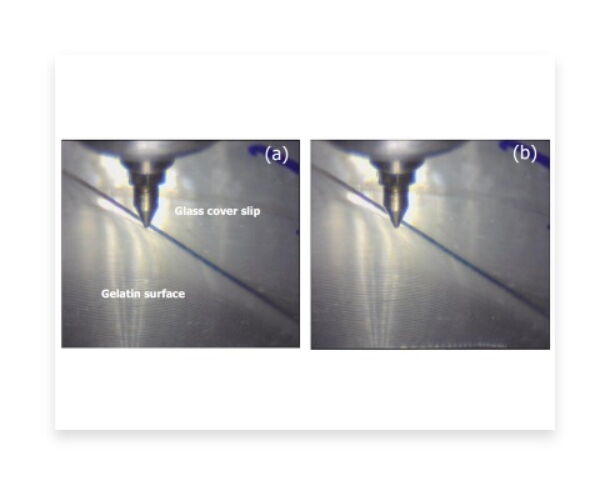
The Remote Video Option provides two more viewing angles within the iNano chamber, in addition to the existing microscope objective. One bracket is mounted for focusing on the indenter tip during the test, an ideal setup for flexures and soft materials. The second bracket mounts on the gantry for viewing both the sample and the microscope objective during test setup. Switching the view between the standard microscope objective and the USB camera is software-controlled.

Related Products
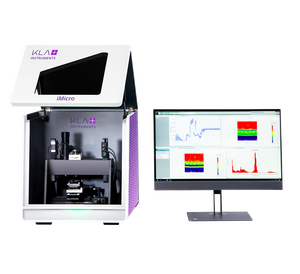
Service Support
Comprehensive repairs and servicing
Annual Support Programs
Your metrology instrumentation is a major investment that is critical to your business operation and success. In today’s competitive climate, it is more important than ever to extend the functionality and peak performance of your metrology equipment years beyond the expiration of your factory warranty. CN Tech’s Support Programs will help ensure that your investment is protected, and that you and your instrument’s are always operating at peak performance.
With over 20 years’ experience servicing and repairing you can be assured that your system is in safe hands. The independent services we offer include system relocation, maintenance visits, parts and consumables, and break down interventions.
CN Tech’s Support Programs are an economical way to guarantee optimal working condition:
- Annual Preventive Maintenance
- Priority Technical Assistance
- Preferred Parts Availability
- On-Site User Training
- Remote Diagnostics
- No surprise repair expense and much more!
Support Contact Example
An example of our service and support contracts are shown below:

Metrology & Instrumentation Annual Support Programs 2024/25
CN Tech's Support Programs will help ensure that your investment is protected, and that you and your instrument’s are always operating at peak performance.